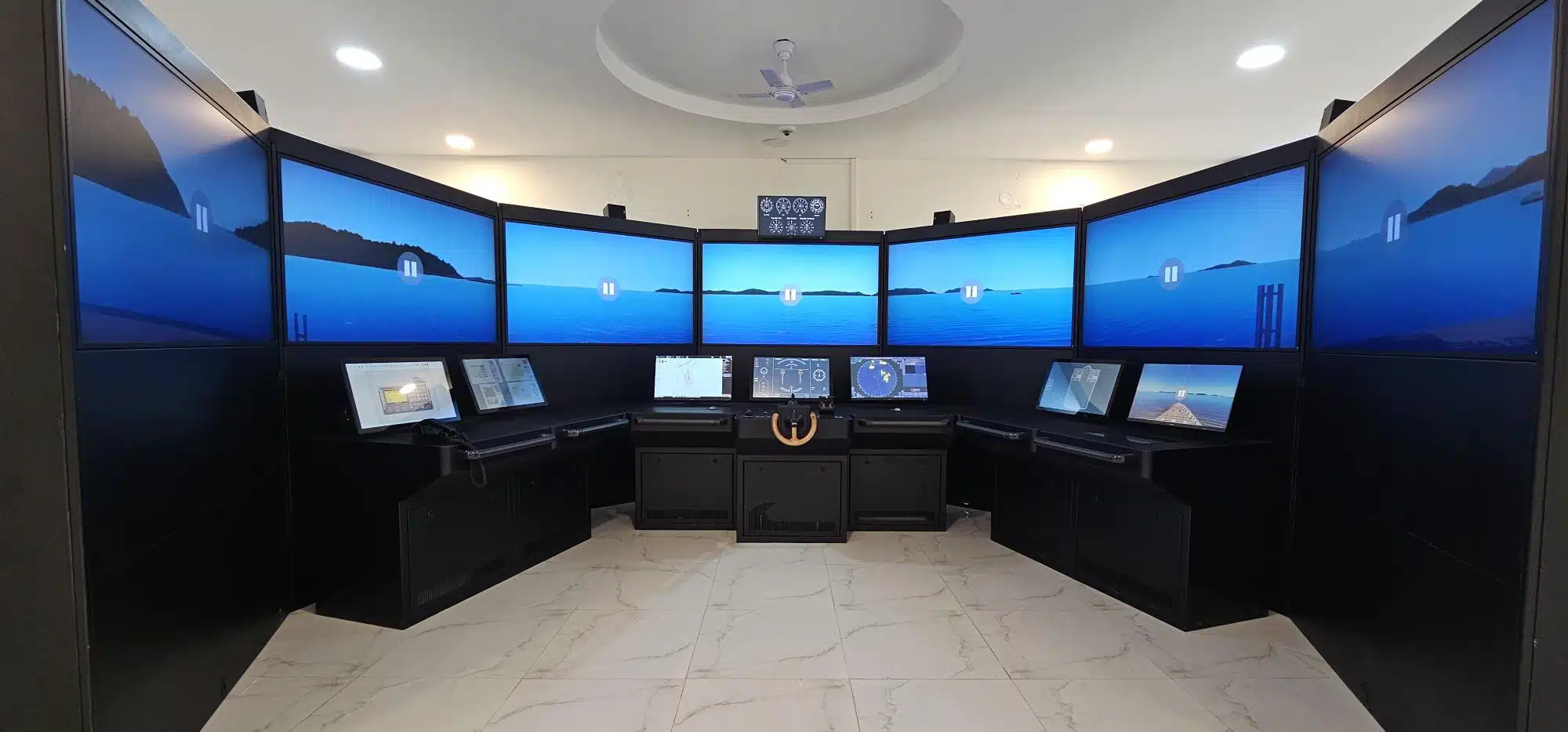
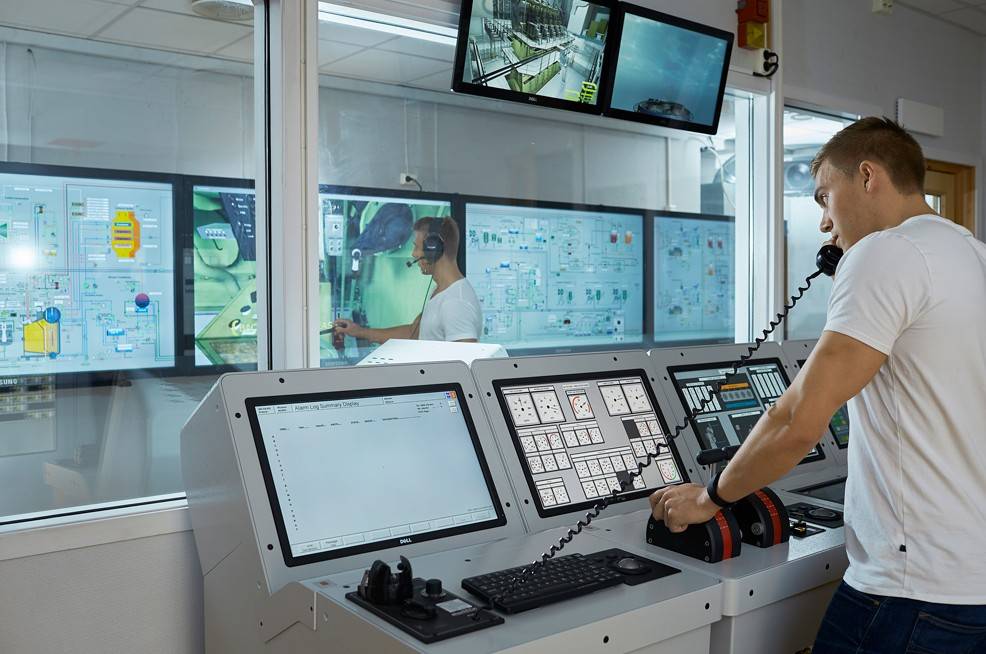
VSTEP delivered a NAUTIS Class A simulator environment to the Djibouti Coast Guard, strengthening maritime safety and operational readiness while marking VSTEP’s first simulator installation in Eastern Africa. The new facility will combine an instructor station with the NAUTIS naval module, expanding training capacity and giving officers greater flexibility to practise navigation, manoeuvring, and operational response whenever needed.
The Djibouti Coast Guard has taken a significant step forward in strengthening maritime safety and readiness with the acquisition of a NAUTIS Class A simulator, including an instructor station and naval module. This marks the first VSTEP simulator in Eastern Africa and underlines the Coast Guard’s commitment to advancing training standards in the region.
For the Djibouti Coast Guard, this simulator represents an immediate leap in training capacity. Until now, the region had no access to maritime simulators. With the NAUTIS simulator, officers can train whenever needed and prepare for a wide range of real-world maritime scenarios, from navigation and maneuvering to operational response. The system also creates opportunities to extend training access to external organizations, further amplifying its value.
Speaking about the new capabilities, Saad Ibrahim Ali, Naval Commissioner at the Coast Guard, said: “This simulator gives us the tools to train our people more effectively and on our own terms. It allows us to strengthen safety and operational competence in ways we could not before. We see this as the beginning of a long-term partnership to keep building our training capabilities for the future.”
Following installation and final testing on site in Djibouti, the simulator has now been handed over to the Coast Guard and is ready to support their training.
Luuk ten Bergen, Business Developer at VSTEP, commented: “We are honored to support the Djibouti Coast Guard with their first simulator. Beyond delivering technology, our role is to enable their teams to train with flexibility and confidence, and to unlock their full potential. This is a milestone not just for Djibouti, but for maritime training across Eastern Africa.”
With this partnership, the Djibouti Coast Guard is setting a new standard for maritime learning in the region, ensuring safer operations today while laying the foundation for long-term capacity building.
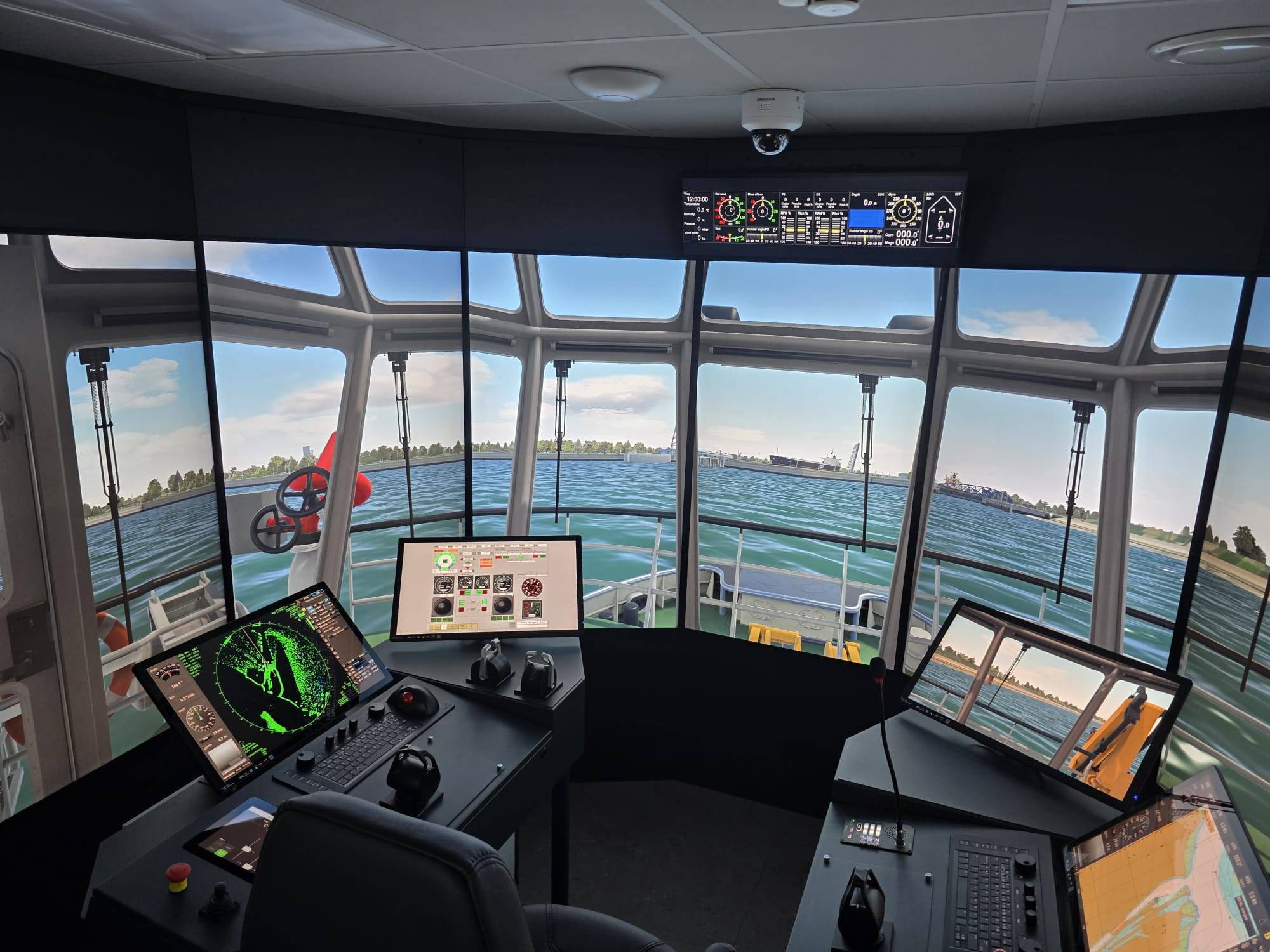
Novatug, the innovation and R&D department of Multraship Towage & Salvage, has launched a brand new advanced simulator and training center using technology from Wärtsilä to promote safer operations and strengthen the preparedness and effectiveness of its crew for complex towage, vessel handling and specialist maritime operations.
The new simulator suite, which is based at the group’s headquarters in Terneuzen in the Netherlands, enables masters, towmasters and crews to train in realistic operational scenarios, including complex towing procedures, challenging navigational conditions, project towage operations and emergency response scenarios.
The new training center brings together a state-of-the-art full mission simulator, mixed reality technology, project simulation capabilities and customized digital vessel models that reflect the operational environments and vessel handling requirements of the fleet. This includes a high-fidelity digital model of a Carrousel RAVE Tug, enabling crews to train for tailored and highly specialized maneuvering, towage and vessel handling scenarios.
The training center is supported by a team of experienced trainers, all of whom are active, or recently active, vessel captains. This means they continue to draw on hands-on, on-board experience as they train other crew members alongside their real-world operations.
The introduction of the new state-of-the-art training centre comes as Multraship, together with Novatug, continues to equip its people for increasingly complex and high-pressure situations, while also preparing them for the operational challenges of future vessels, including new propulsion methods, fuel types and data-led scenarios.
Beyond internal crew development, the facility will also be available to external clients and partners, for crew training, project simulation, port operation assessments, dedicated research initiatives and bespoke vessel handling scenarios ahead of live execution. Over time, the ambition is to develop the site into a dedicated regional training centre for the wider maritime community.
Kongsberg Maritime, a global marine technology company providing innovative and reliable technology solutions for all marine industry sectors has been awarded a contract by the French Navy (Ministère des Armées et des anciens combattants) to deliver advanced ship bridge simulation systems to the French Naval Academy, École Navale, located in Lanvéoc near Brest, France.
The contract was awarded following a competitive tender process in which Kongsberg Maritime achieved the highest overall evaluation score. The new simulation systems will support the academy’s longstanding mission of educating and training naval cadets and officers. With more than 200 years of history, École Navale is widely recognised as one of the world’s most prestigious naval education institutions.
The delivery, scheduled for october2026, will include four fully equipped K-Sim Navigation high-fidelity ship bridge simulators. Each simulator will feature integrated radar systems and a 270-degree visual environment using high-end projection technology to enable realistic and immersive team training scenarios.
The project also includes integration of Virtual Reality and Mixed Reality 3D visualisation, two hybrid bridges designed for multi-purpose training, as well as desktop simulators configured for ECDIS training in a classroom environment. In addition, Kongsberg Maritime will develop several customised warship models and sailing areas tailored to the operational requirements and training objectives of the French Navy.
Commandant Gabriel, French Navy, comments: “This simulator investment will replace our previous training system, and we are pleased that Kongsberg Maritime met our expectations for a high-end training solution. The new simulators will provide access to high-quality simulation technology with advanced navy functionality enabling highly realistic and effective training for our cadets and officers.”
“Approximately 30 years ago, we delivered simulators to the French Navy for the first time. We are therefore very pleased to confirm our relationship and continue supporting the high-quality training of their cadets and officers,” says Are Føllesdal Tjønn, Managing Director – Simulation at Kongsberg Maritime. “With this investment, the French Naval Academy will join a global community of leading naval academies that rely on Kongsberg Maritime simulation technology for immersive training and education.”
With this delivery, Kongsberg Maritime further strengthens its long-standing position as a trusted partner to navies worldwide. The solution delivered to École Navale combines high-fidelity simulation, advanced visualisation technologies, and tailored naval functionality to support safe, effective, and future-ready training.
The new simulators will enable the French Naval Academy to train cadets and officers in complex operational scenarios, enhance team performance, and prepare crews for real-world missions in an increasingly demanding maritime environment.
Technology group Wärtsilä has launched a next-generation bridge and ship-handling simulator aimed at supporting maritime training as the industry shifts towards digital navigation and more complex vessel operations.
The new platform, NTPRO 7, is designed to provide immersive training environments for ship-handling, navigation and decision-making across a range of operational scenarios.
The simulator incorporates RealSea visualization powered by Unreal Engine 5 and an advanced sound system to enhance realism, alongside new conning and overhead displays that replicate onboard systems.
It also includes S-100 ready digital navigation training using Wärtsilä Navi-Sailor, an electronic chart display and information system for maritime operations.
Additional features include Virtual Watchkeeper with AI-powered voice command recognition and tools to support training for wind-assisted propulsion systems.
The platform has received a Statement of Compliance from DNV, confirming its suitability for navigation training.
Wärtsilä said NTPRO 7 offers scalable configurations ranging from full-mission bridge simulators to classroom-based setups, enabling training institutions to simulate complex operations without physical risk.
The company added the platform will be commercially available from May 2026 following a two-year testing and validation phase.
“The requirements placed on maritime training are evolving rapidly as vessel technologies, digital navigation standards and regulatory expectations continue to advance.
“NTPRO 7 is designed to help training institutions and academies prepare crews for these changes by providing a future-ready simulation environment that mirrors modern bridge operations and supports long-term competence development,” said Johan Ekvall, Director, Simulation & Training at Wärtsilä Marine.
The Seamen’s Church Institute’s Center for Maritime Education (CME) has established a new partnership with the U.S. Army Engineer Research and Development Center (ERDC) in Vicksburg, MS, with the goal of improving maritime training, advancing ship simulation technology, and enhancing safety across the nation’s waterways.
The collaboration, formalized through a recent Memorandum of Agreement by the U.S. Army Corps of Engineers, is the result of ongoing conversations with mariners, industry leaders, and federal partners over the past several months.
Mariners, companies, and industry partners played a key role in shaping the partnership. Their feedback highlighted both the value of ERDC’s realistic environmental modeling and SCI’s high-fidelity tow-simulation capabilities, as well as the need for improved access to project data, such as bathymetry, current patterns, and environmental conditions. Rather than viewing each organization’s capabilities as competing approaches, both recognized an opportunity to integrate them, potentially creating more effective, realistic training tools that better reflect real-world conditions.
Under the agreement, CME and ERDC’s Coastal and Hydraulics Laboratory will work together to improve ship simulation technologies, broaden access to quality training, and support USACE navigation project design and delivery. By sharing knowledge, tools, and facilities, the partnership will boost simulation capabilities, sharpen project design, and speed up innovation in the maritime sector. This partnership also helps USACE modernize infrastructure planning and delivery through advanced simulation tools, increasing efficiency, improving results, and enhancing safety.
The U.S. Army Engineer Research and Development Center (ERDC) is the research and development arm of the U.S. Army Corps of Engineers, focused on solving complex engineering and environmental challenges. ERDC conducts world-class research in areas such as water resources, infrastructure, geospatial science, and military engineering to support national security and public safety. Through innovation and collaboration, ERDC delivers technical solutions that enhance infrastructure performance, environmental sustainability, and mission readiness.
The Seamen’s Church Institute’s Center for Maritime Education (CME) operates two advanced training and simulation research facilities in Paducah, Kentucky, and Houston, Texas. CME provides high-fidelity simulator training and online courses tailored to the inland and Gulf Coast maritime industry, along with assessment services that help mariners and operators evaluate skills and provide credentials. In support of safer waterways and stronger infrastructure, CME also partners with engineering firms, port authorities, and transportation agencies to conduct simulator-based feasibility studies, testing vessel operations and construction viability in real-world marine environments.
uilding on the Memorandum of Understanding (MoU) signed between Peninsula and the University of Gibraltar earlier this year, the two organizations have taken their collaboration to the next level with the creation of the Peninsula Maritime Simulation Suite, a high-tech facility, funded by Peninsula, set to support cadet education and professional development.
This investment not only fulfills mandatory UK Maritime and Coastguard Agency (MCA) training requirements but positions Gibraltar as a rising global hub for maritime excellence.
Supporting the University’s broader vision of establishing a world-class Maritime Simulation Centre, it will also help expand the reach of its BSc (Hons) Maritime Science and Cadetship program. The new suite will provide mandatory simulation training required by the UK’s Maritime and Coastguard Agency (MCA), enabling cadets to progress toward their Certificate of Competence as Officers of the Watch.
The facility will feature a Part Task Navigational Bridge Simulator, fully compliant with the MCA’s updated sea-time equivalency requirements. It will support multi-language instruction (English, Spanish, French) and offer tailored training modules for Peninsula officers and crew, including LNG bunkering scenarios and other complex operations.
Using technology from Wärtsilä, the suite will be the only facility of its kind in the region.
Finland-based Aboa Mare has strengthened its maritime training capabilities by investing in a K-Sim Engine Full Mission and Desktop Simulator system from Kongsberg Maritime.
The delivery is set to be completed in the first quarter of 2026 and will include some of the most advanced simulator models available, comprising both conventional and next-generation propulsion technologies, such as hybrid, battery, dual-fuel, LNG and methanol-fuelled engines.
With the new simulator, Aboa Mare’s students and professional seafarers will receive practical training that aligns with the global maritime industry’s green transition.
The K-Sim Engine simulator system is fully compliant with STCW requirements and DNV standard ST-0033 and will be delivered with DNV Class A & C certification, ensuring the highest levels of quality and realism in maritime training. The simulator will be the first at Aboa Mare with DNV classification.
“We are committed to delivering high-quality training that reflects the latest developments in maritime operations. The collaboration with Kongsberg enables us to provide realistic and future-oriented learning environments.
“By integrating the latest propulsion technologies into our training, we are ensuring that our students and customers are well prepared to contribute to the industry’s green transition,” said Thomas Lundberg, Simulator Manager, Aboa Mare.
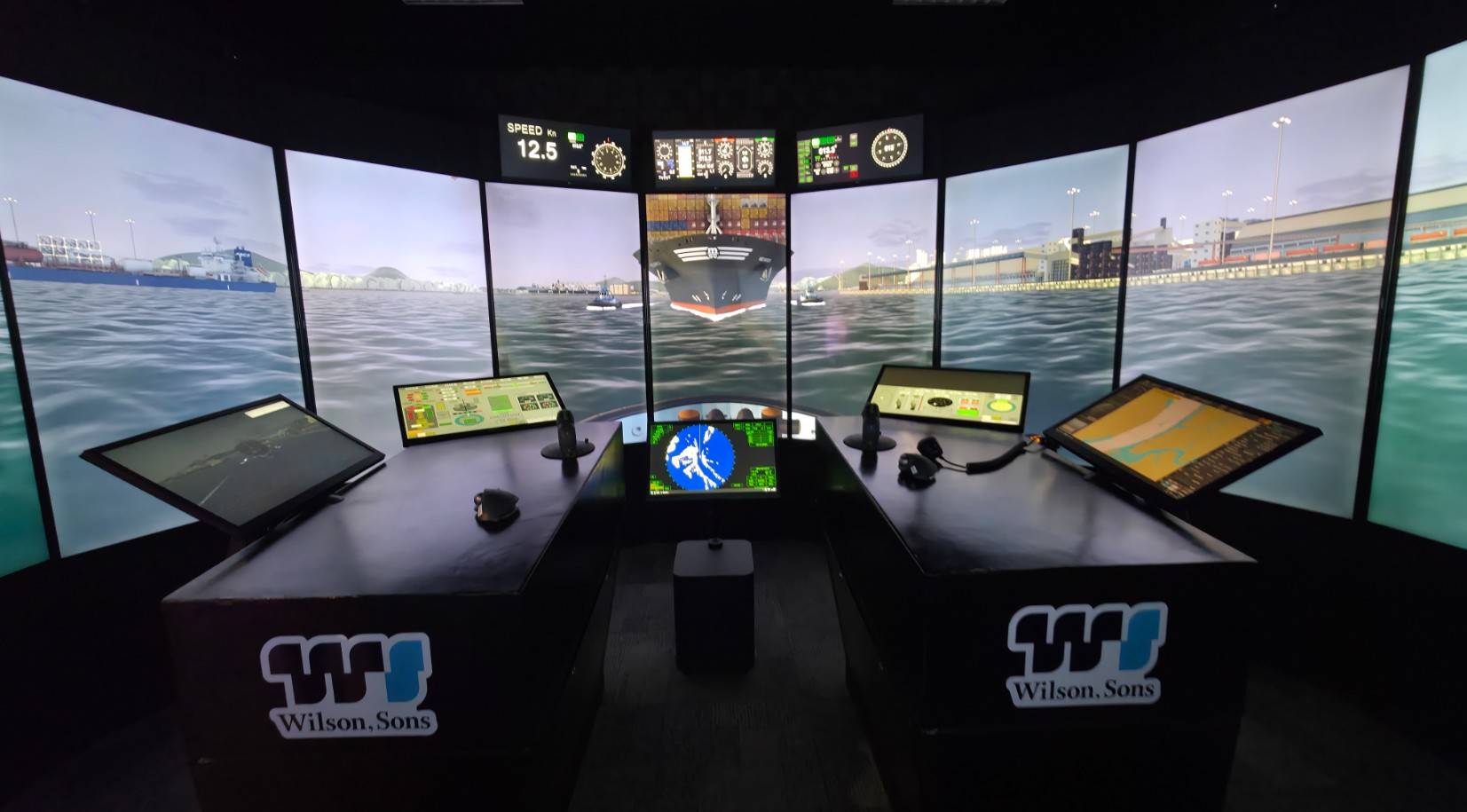
Shipping and logistics firm Wilson Sons has opened new facilities at its Training Centre and Towage Operations Centre in Santos, São Paulo, including a tugboat manoeuvre simulator designed to improve operating safety, efficiency and sustainability.
This simulator will train the company’s captains and maritime workers on safety procedures and cutting-edge technology for its fleet of over 80 tugboats, which operate in more than 25 ports along the Brazilian coast, supporting domestic and international trade, as well as the offshore energy industry.
Simulator training enhances operating safety and efficiency, and supports the analysis and improvement of manoeuvres of large ships (up to 366 meters), which reduces operating restrictions at Brazilian ports.
Another special feature of this technology is scenario analysis, where different environments are simulated, and solutions are tested and developed for different port challenges faced in Brazil, with customized simulations for each port.
“The technology behind the new manoeuvre simulator supports our innovation strategy. It is a tool that increases the safety and efficiency of our operations, supporting the growth of the Brazilian port industry and the competitiveness of the global logistics chain,” said Rodrigo Bastos, Director of Towage Operations at Wilson Sons.
The manoeuvre simulator can also be used by clients and other stakeholders in project analysis and testing activities. Wilson Sons’ Towage Operations Centre (COR) had been set in the same location, and in 2011, it began real-time monitoring of the company’s tugboat fleet.
SCI, through its Center for Maritime Education, is a leading provider of simulation-based training in the United States. With this renewed partnership, SCI will leverage KOTUG’s internationally recognized trainers and consultants to enhance its harbor tug training programs and integrated tug master–ship pilot courses. KOTUG, a global leader in harbor, river, and terminal towage training, will benefit from access to SCI’s state-of-the-art vessel and tug simulators. Together, the organizations will offer complementary services to ports, terminals, and the inland tug and barge industry, ensuring mariners have access to advanced training and innovative assessment tools.
“The renewal of our partnership with KOTUG reflects our shared commitment to maritime safety and excellence,” said The Rev. Mark Nestlehutt, President and Executive Director, The Seamen’s Church Institute. “By combining our facilities with KOTUG’s global expertise, we can deliver the highest quality training for American mariners.”
“We are proud to continue working with SCI,” said Ard-Jan Kooren, CEO, KOTUG. “This collaboration merges international best practices with SCI’s deep knowledge of the U.S. market, providing unparalleled opportunities for maritime professionals.”
The renewed agreement strengthens both organizations’ ability to meet the evolving demands of the maritime industry and supports their mission to enhance safety, performance, and professionalism on the water.
Kongsberg Maritime, a leading technology partner for the maritime industry announces the launch of its cutting-edge K-Sim Offshore DP3 Anchor Handling Simulator, setting a new standard for training and operational excellence in the Maritime sector.
With an investment of over £250,000, this innovative training solution is designed to elevate competency standards, enhance operational efficiency, and promote sustainability across the sector. Additionally, it focuses on improving maritime safety by supporting our local customers and partners in ensuring safe operations and reducing risks in critical maritime activities.
Situated at Kongsberg Maritime’s Aberdeen office in Westhill, the simulator has been upgraded in response to the growing need for skilled Dynamic Positioning professionals, particularly in offshore oil and gas operations, including drilling, pipe-laying, heavy lift and emerging floating wind operations . The simulator will provide operators with the essential skills and expertise needed to safely and efficiently support large-scale projects in the North Sea and across Europe.
The simulator provides a highly realistic training environment, allowing course delegates to practice complex operations and emergency preparedness in a fully immersive, controlled conditions. By replicating real-world scenarios with advanced physics-based simulations, it improves competency, enhances safety, and reduces reliance on expensive on-the-job training.
To further support the simulator, Kongsberg is increasing its instructor team from two to three expert Dynamic Positioning Operators in 2025, bringing a wider range of knowledge and experience to strengthen its training programs.
Kerry Craig, Operations Manager at Kongsberg Maritime, said, “In today’s maritime industry, we face increasing operational complexity, heightened safety demands, and the urgent need to reduce environmental impact, all while managing tighter budgets and a growing skills gap. Kongsberg Maritime set out to develop a solution that would provide highly realistic, risk-free training whilst ensuring operators gain the skills and confidence needed to perform at the highest level.”
“The K-Sim Offshore DP3 Anchor Handling Simulator sets itself apart with advanced physics-based simulations and hydrodynamic modelling, allowing trainees to operate in a variety of vessel types, locations, and weather conditions. This level of realism enhances competency among operators, leading to better performance in the field. This is about empowering people with the right tools to work smarter, safer, and more sustainably, driving a real ‘step change’ in maritime training,” said Kerry.
Kongsberg Maritime also aims to collaborate with local ports and universities to maximise the potential of the new simulator’s functionality. While the simulator is designed for onsite training, these partnerships are expected to enrich the training programs and contribute to the development of future maritime professionals.